

Riot Games has officially entered the physical trading card game space with Riftbound TCG, a new League of Legends-powered TCG built for both competitive 1v1 play and more social multiplayer sessions. If you have seen the name pop up everywhere but still are not sure what it actually is, this is your clean starting point.
Here you’ll find what Riftbound TCG is, how a match flows, what products exist, how rarities work, and what Riot has said about the game’s future.
Riftbound TCG at a glance
| What is it? | A physical collectible trading card game set in Runeterra (League of Legends universe) |
| How many players? | 1v1 is the core, with support for 3–4 player modes |
| What’s the goal? | Score points by controlling objectives called battlefields |
| What do you build around? | A Champion that defines your deck’s identity |
| What’s the big twist? | Positioning and battlefield control are central, not just trading damage |

What makes Riftbound TCG different from other card games?
Most TCGs are about building a board, trading resources, and eventually pushing through for lethal. Riftbound TCG still has that core DNA, but it pushes matches toward map control.
Instead of one shared battlefield, players contest multiple battlefields. You earn points by capturing and holding them, so you’re constantly making decisions about where to commit power, when to rotate units, and when to fight or threaten a different objective.
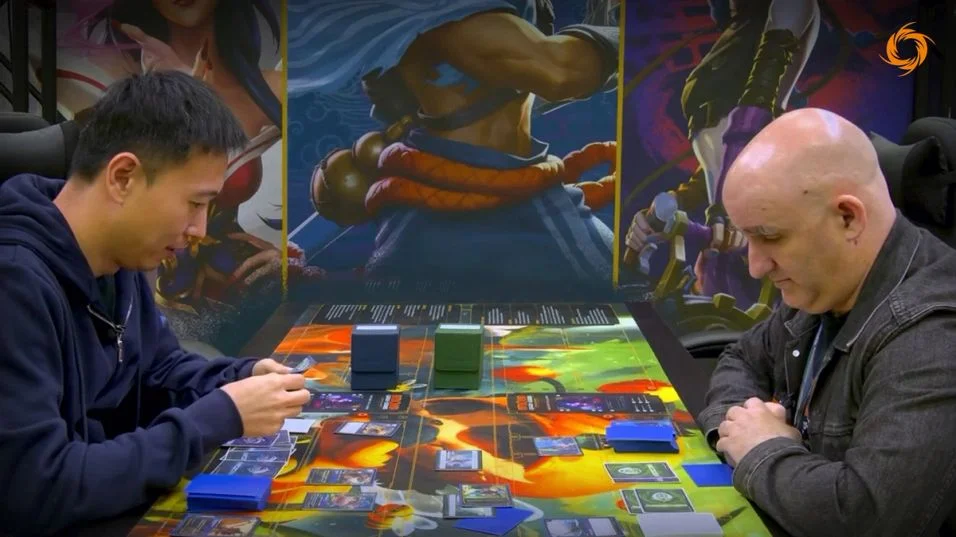
Source: Riftbound
If you like games where tempo and positioning matter as much as raw value, Riftbound TCG leans into that style.
How a Riftbound game works
Here’s the simplified loop, without getting stuck in full rules detail:
- Choose your Champion
Your Champion sits at the heart of your deck and helps define what you can play and how you want to win. - Set up battlefields
Players bring battlefield cards into the match. These become the objectives everyone fights over. - Build resources, play units and spells
You develop your board, play spells, and start contesting battlefields. - Move units to battlefields
This is a key difference: committing to a battlefield matters. Timing and positioning are a big part of the skill ceiling. - Capture and hold to score points
Control a battlefield to score, keep holding it to keep scoring. The first player to the win threshold takes the match.
That’s the core. Our dedicated rules guide will break down turn structure, combat, movement, and timing windows in a step-by-step format.
The resource system, runes and pacing
Riftbound TCG uses a resource system built around Rune cards. The practical takeaway is this: the game is designed to keep players playing cards, rather than getting stuck on bad draws for resources.
You typically grow your resources in a predictable way each turn, and you can choose between:
- spending resources normally for steady development
- pushing harder for a big tempo turn when the game state demands it
That creates a pace where big swings can happen, but they usually come from planning, not from randomly drawing or missing a resource card at the wrong time.
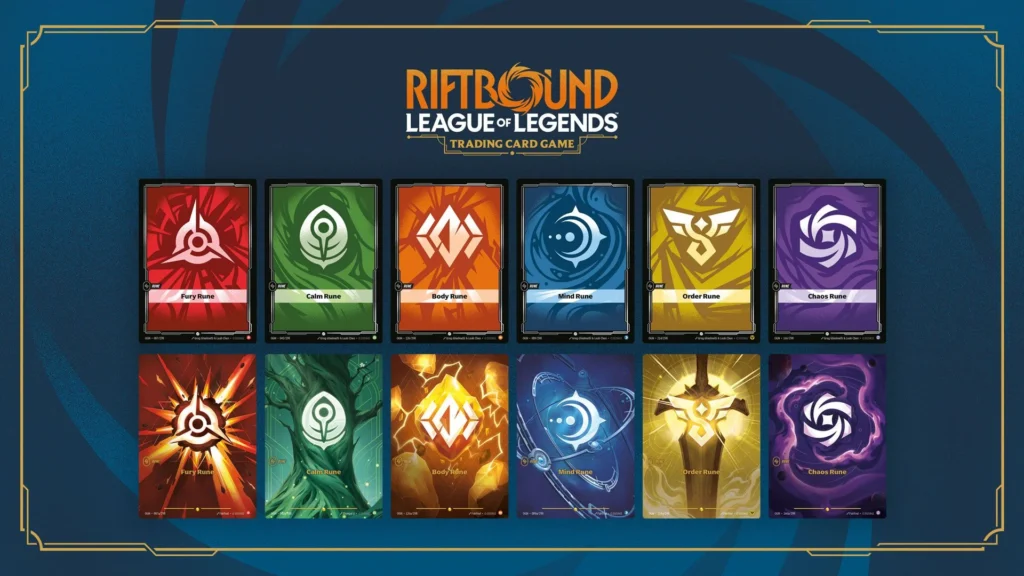
Source: Riot Games
Cards and deckbuilding basics
Riftbound TCG is a collectible game, so you build your own deck from your collection. Even at a high level, a few concepts are worth knowing before you buy anything.
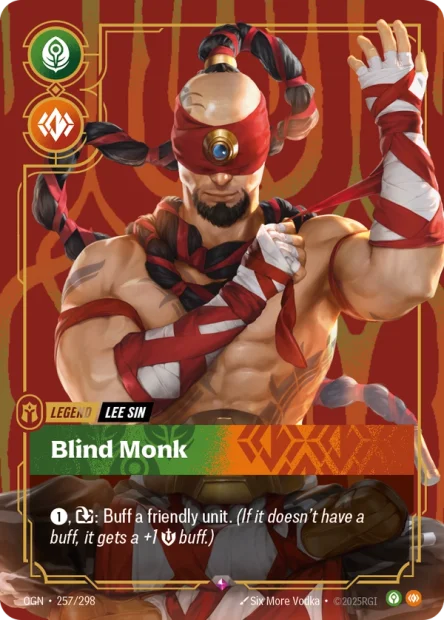
Legends as your identity
Your Legend is not just flavor. It shapes what your deck is trying to do. Some Legends push aggression and burst, some lean into control, some reward long-term engine building.


Card types you will see often
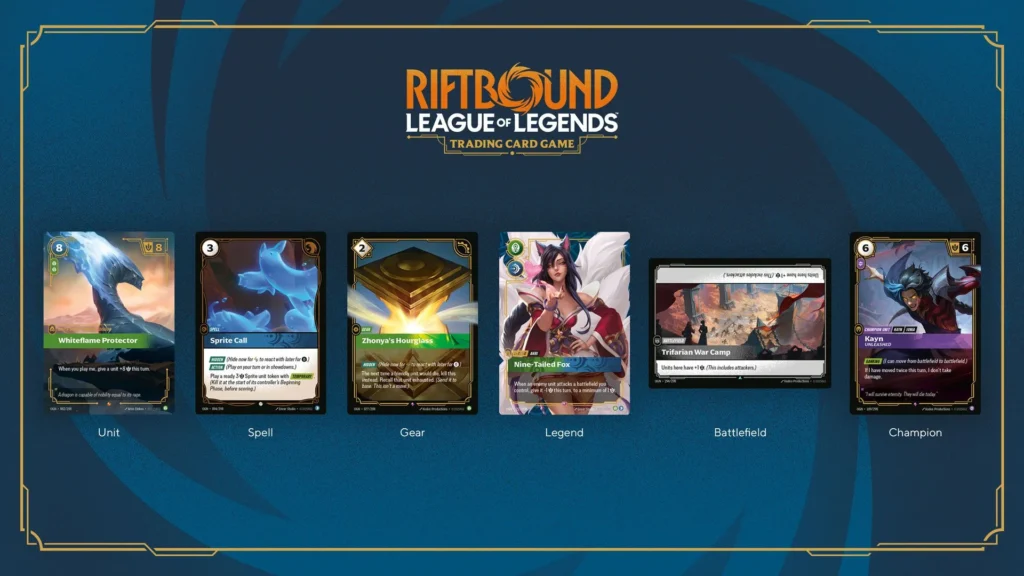
You can expect the usual TCG building blocks, Riftbound’s versions include:
- Units, your board presence and your main way to contest battlefields, these are the bodies you move around to fight and score.
- Spells, flexible effects that swing fights, remove threats, or set up captures at key moments.
- Gear, upgrades that change how a unit fights and survives, perfect for turning a threat into a win condition.
- Legends, your main identity card, this is the Champion you build around and the card that shapes your game plan.
- Battlefields, the objectives you fight over, capturing and holding these is how you actually win games.
- Champions, powerful character cards tied to League’s biggest names, often acting as the centerpiece units you want to protect, level up, or play around depending on the deck.
Source: Riot Games
Products in Riftbound TCG
Riftbound TCG is sold in a few different product types, and which one is best depends on whether you want to learn, collect, or compete.
| Product | Best for | What you get | Who should buy it |
|---|---|---|---|
| Starter-style set (learn-to-play) | Learning with friends | Multiple ready-to-play decks and game essentials | New players, casual groups, game nights |
| Champion prebuilt deck | Jumping straight into a playstyle | A complete deck built around one Champion | Players who want a “pick a main and grind” experience |
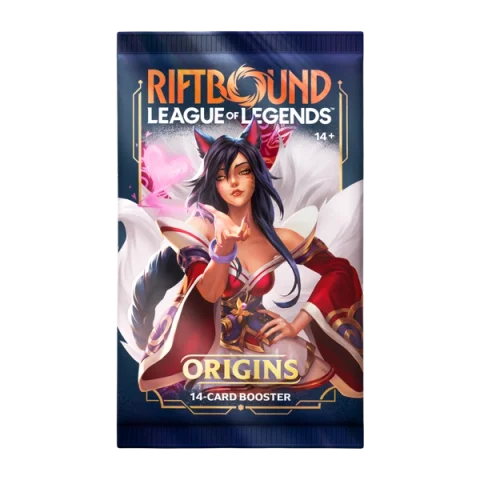
| Booster packs | Collecting, upgrades | Random cards, including foils | Players upgrading decks or building a collection |
| Booster box | Serious collecting | A large batch of boosters | People who want a full set chase or group openings |


The Cards Rarity
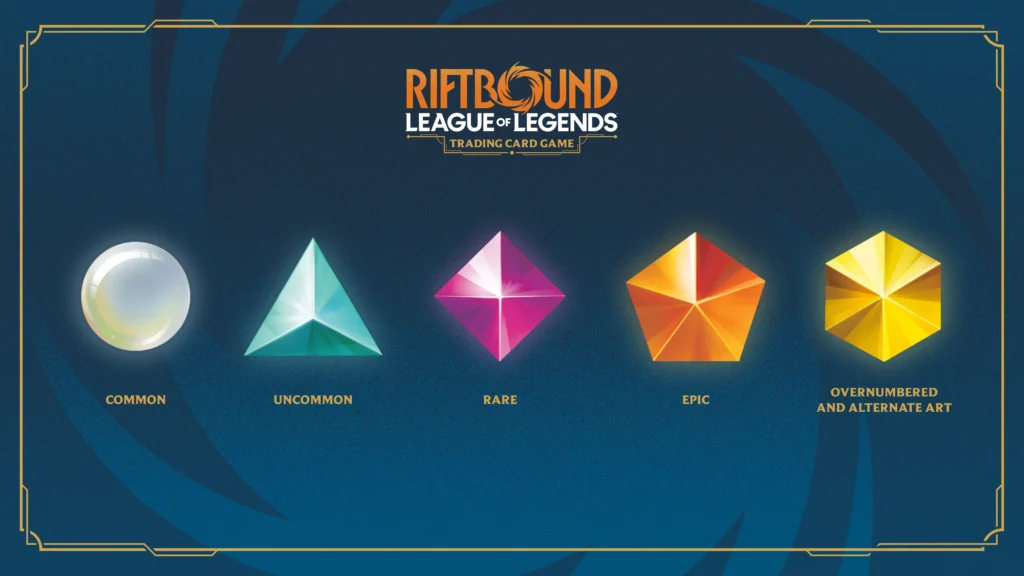
Riftbound TCG uses a familiar rarity ladder, but it is still worth understanding, because it affects both collecting and deck access.
| Rarity | What it means | Typical role in decks |
|---|---|---|
| Common | Most available, foundation cards | Core units, basic tools, consistency pieces |
| Uncommon | More specialized | Tech cards, battlefields, role players |
| Rare | High-impact, signature cards | Champions and key build-around effects |
| Epic | Top-end, premium effects | Finishers, unique payoffs, powerful swings |
Riot has also leaned into collectibility with special variants, including alternate art styles and premium chase versions. That matters for collectors and for the secondary market, but it does not stop regular players from building functional decks.
Source: Riot Games
How Riftbound fits into the Riot ecosystem
Riftbound TCG is not “Legends of Runeterra in paper form.” It’s a different product with a different identity.
Here’s the easiest way to think about it:
- League of Legends is your competitive action game.
- Legends of Runeterra was digital-first, with a very different economy and pacing.
- Riftbound TCG is a physical tabletop game built around collecting, trading, local play, and organized events.
The shared ingredient is Runeterra itself: Champions, regions, and iconic themes that League fans already care about.
What’s next for Riftbound?
Riot has already signaled that Riftbound is meant to be supported with more cards, more Champions, and more ways to play. New sets expand the Champion roster, introduce mechanics, and give existing decks new tools.
What you should expect over time:
- new expansions that add Champions and regions
- new mechanics like equipment-style upgrades and alternate resource angles
- more structured organized play, including regional events and store-level play
Where to start, depending on your goal
- If your goal is to learn Riftbound fast, the easiest path is grabbing a learn-to-play starter and running a few multiplayer games first, since it teaches the flow while keeping things fun and low pressure.
- If you already know you want to main a specific Champion, a prebuilt Champion deck is the smoothest starting point, then you can upgrade it with boosters as you figure out what the deck is missing.
- If you are here for collecting, boosters and booster boxes give you the broadest spread of the set, and trading is usually the quickest way to fill the gaps you do not pull.
- If you want to compete seriously, you should start by locking in a proven archetype, then target upgrades efficiently instead of ripping endless packs hoping to hit specific staples.
Riftbound TCG – FAQ
What is Riftbound?
Riftbound is Riot Games’ physical trading card game set in the League of Legends universe, where you build a deck around a Champion and fight for control of objectives called battlefields.
Is Riftbound a digital game or a physical card game?
Riftbound is a physical tabletop TCG. You buy cards in products like starter sets, prebuilt Champion decks, and booster packs.
Do I need to know League of Legends to enjoy Riftbound?
No. League knowledge helps you recognize champions and themes, but the game is designed so new players can learn it as a standalone TCG.
How do you win a match in Riftbound?
You win by earning points through capturing and holding battlefields. The focus is less on “reduce life to zero” and more on winning fights in the right place at the right time.
How many players can play Riftbound?
Riftbound supports classic 1v1 play, plus multiplayer formats depending on the product and ruleset you’re using. Multiplayer is a big part of the game’s appeal for casual groups.
What should I buy first if I’m brand new?
If you’re starting from zero, a learn-to-play starter is usually the best entry because it gives you ready-to-play decks and teaches the flow of the game. If you already play TCGs and want a faster path to a focused strategy, a Champion deck plus a few boosters is a solid start.
Are Champions the same thing as Legends?
Not exactly. Legends are your main identity card that anchors your deck’s plan, while Champions are powerful character cards you play and build around during the game. Some Champions will feel like the centerpiece threat you protect, upgrade, or set up for big turns.
Is Riftbound the same as Legends of Runeterra?
No. They share the Runeterra universe and familiar champions, but Riftbound is built for physical play, collecting, trading, and store level communities, rather than a digital card economy.
Are there rarities and chase cards?
Yes. Riftbound has standard rarities (common to high-end rarities), plus foil treatments and special variants intended for collectors.
Will Riftbound have organized play and tournaments?
Riot has signaled support for competitive play with official event structures and regional level competition, alongside local store play. Expect more details to expand as the game grows.
Where can I buy Riftbound?
You can typically find Riftbound at local game stores that carry TCGs, and through major online retailers depending on your region.



0 Comments