

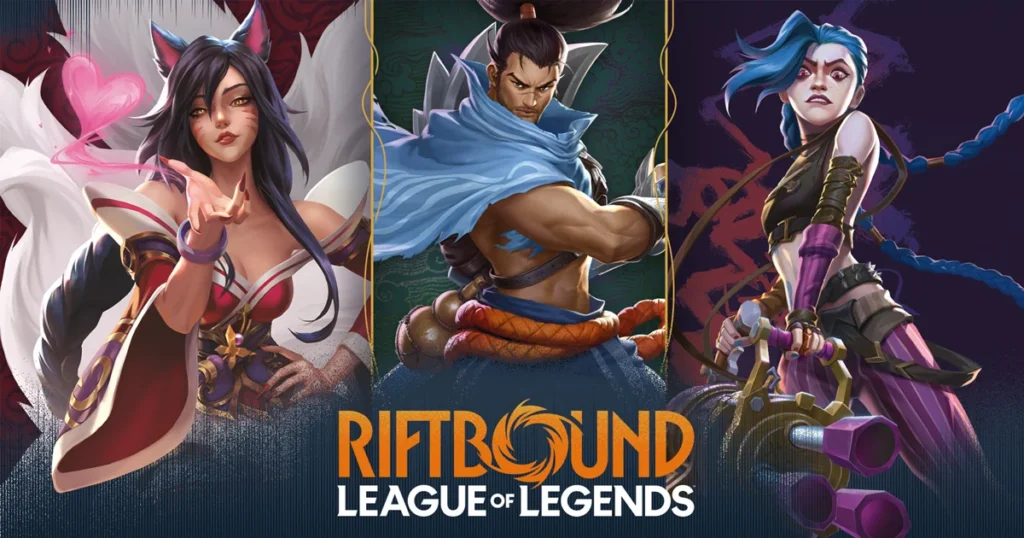
Riftbound: Origins is the first full set of Riot Games’ physical League of Legends trading card game. It launched in China on August 1, 2025, followed by English-language regions on October 31, 2025, and introduced 300+ cards, multiple starter products, and the core systems that will shape competitive play for years.
But Origins is more than just “set one.” It’s the foundation everything else in Riftbound is built on — from how Champion Legends define decks, to how Battlefields, Runes, and Showdowns create constant tension at the table.
If you’re new to Riftbound, this is where your journey starts. If you’re already playing, Origins is the set you’ll keep coming back to, even as future expansions add complexity.
What is Riftbound: Origins?
Riftbound: Origins is the debut expansion of Riftbound – The League of Legends Trading Card Game, a physical TCG set in the world of Runeterra. Developed by Riot Games in partnership with UVS Games, Riftbound takes iconic League of Legends champions, regions, and spells and adapts them into a tabletop game designed for 1v1 duels, multiplayer free-for-alls, and 2v2 team formats.
Unlike digital card games, Origins was designed from day one as a physical-first experience, with real cards, local game store play, and an organized competitive ladder.
If you want a broader overview of the game beyond this set, the main Riftbound hub on LoLNow is a good place to start.

Riftbound: Origins release date and rollout
Origins followed a China-first launch strategy, which Riot has confirmed will gradually move toward near-global parity in later sets.
- China release: August 1, 2025
- English-language release: October 31, 2025
- Additional languages: rolling out through 2026
This staggered release allowed Riot to gather early feedback, refine card frames and UI elements, and stress-test competitive formats before the wider launch.
For a complete timeline of Origins and future expansions, check the full Riftbound release date guide.
Origins debut product lineup
One of the smartest things Riot did with Origins was not forcing players into a single entry point. Whether you’re brand new to card games or a seasoned TCG player, there’s a product designed for you.
Proving Grounds – the beginner on-ramp
Proving Grounds is a boxed starter set for 2–4 players, featuring ready-to-play decks built around:
These decks are carefully balanced against each other and designed to teach Riftbound’s systems without overwhelming new players. Multiplayer formats like 3- and 4-player free-for-alls are fully supported, which is rare for a launch TCG product.
This official learn-to-play video walks through the rules using Proving Grounds decks and is worth watching before your first game:
After watching, most players are comfortable jumping straight into real matches. For a written reference you can keep open during games, LoLNow’s Riftbound rules guide breaks everything down in plain English.
Booster packs and booster boxes
For collectors and competitive players, Origins booster packs are where the depth really opens up.
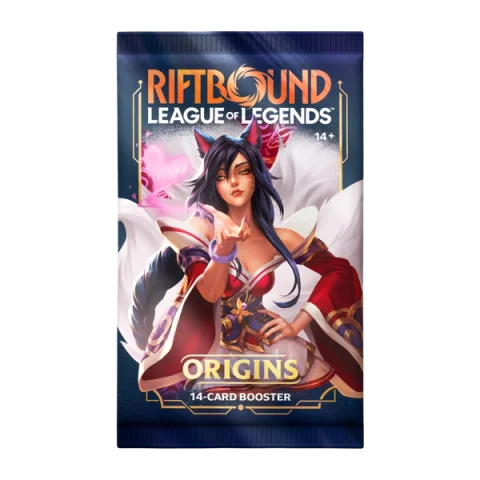
Each booster pack contains 14 cards, including:
- 7 Commons
- 3 Uncommons
- 2 Rares
- Additional slots for higher-rarity or special treatments
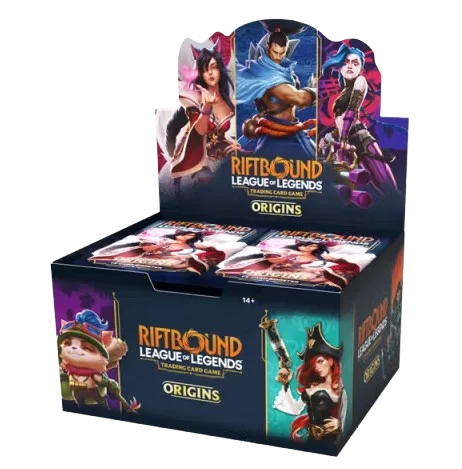
A booster box includes 24 packs, making it the fastest way to build a flexible collection and chase high-value pulls.
Source: Riftbound.LeagueofLegends.com
Source: Riftbound.LeagueofLegends.com
Preconstructed Champion Decks
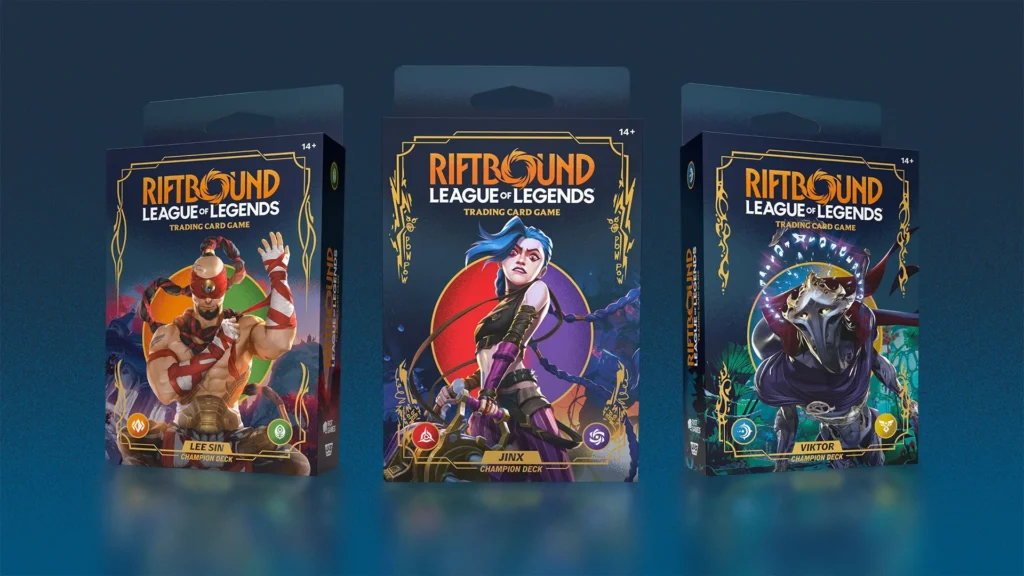
Origins also launched with preconstructed Champion Decks for:
These decks are more focused and competitive than Proving Grounds, giving players a clear identity and playstyle right out of the box. They’re ideal if you already know which champion fantasy you want to lean into.
Source: Riftbound.LeagueofLegends.com
What makes Origins special?
Every TCG launch set has a tough job. Origins had to introduce new mechanics and feel familiar to League of Legends fans. It succeeds at both.
Champion Legends define your deck
Each deck starts with a Champion Legend that is always in play. This card defines:
- Your deck’s domains (colors)
- Its core strategy
- A persistent ability that shapes every turn
This system makes decks feel distinct even when they share cards.
Battlefields and scoring create constant tension
Instead of attacking life totals, Riftbound uses Battlefields as objectives. You score by:
- Conquering a battlefield
- Holding it into your next turn
Games are won at 8 points (or 11 in team formats), which keeps matches tight and interactive.
Runes replace traditional mana systems
Riftbound uses a Rune deck alongside your main deck. Runes generate Energy (temporary, exhaustible) and Power (recycled permanently), which creates meaningful choices every turn.
Notable cards and early standouts from Origins
Origins already has a reputation for high-impact and collectible cards, especially among competitive and collector communities.
A few names you’ll hear often:
- Kaisa (Signature / Showcase versions) – widely discussed as a top-end chase card and deck centerpiece
- Master Yi (Proving Grounds exclusive Legend) – powerful but tied to the starter product
- Deadbloom Predator – a defining epic option for aggressive lines
- Super Mega Death Rocket! – a fan-favorite Jinx spell that matches the fantasy
This video covers highly sought-after pulls and collector targets from Origins:
Prices and metas will shift, but Origins cards are likely to remain relevant for a long time due to Riot’s slow approach to rotation.
Origins in competitive and organized play
Riot and UVS built Origins with organized play in mind from day one. At launch, play is structured around local game store events, prerelease and release tournaments, weekly play, and a competitive ladder that expands over time.
You can find nearby events using the official Riftbound event locator.
For announcements, reveals, and schedule updates, Riot primarily uses these official channels:
Origins and the League of Legends universe
Origins pulls heavily from Runeterra lore. If you enjoy the narrative side, the official League of Legends Universe site is the best companion resource.
For broader Riot updates beyond Riftbound, keep an eye on Riot Games.
Is Riftbound: Origins a good starting point?
Yes – and that’s by design.
- New players can start with Proving Grounds and learn naturally
- League fans get immediate familiarity through champions and regions
- TCG veterans have enough depth to start brewing competitive decks right away
If you want a wider perspective on how Origins fits into the game’s future, LoLNow’s Riftbound TCG overview ties sets, formats, and strategy together.
FAQ – Riftbound: Origins
When was Riftbound: Origins released?
Origins launched August 1, 2025 in China and October 31, 2025 in English-language regions.
How many cards are in Riftbound: Origins?
The set includes 300+ cards, spanning commons to ultra-rare signature and showcase variants.
What products are part of Origins?
Booster packs, booster boxes, Proving Grounds starter set, and preconstructed Champion Decks for Jinx, Viktor, and Lee Sin.
Are Origins cards legal long-term?
Yes. Riot has confirmed no formal rotation will happen before 2028, meaning Origins will stay relevant for years.
Where can I learn the rules?
For a fast, practical reference, use LoLNow’s Riftbound rules guide.
How Origins shapes the future of Riftbound
Riftbound: Origins isn’t just a launch set – it’s the DNA of the game. Every future expansion builds on the systems, pacing, and identity established here.
Whether you’re collecting, competing, or just playing kitchen-table games with friends, Origins is the set that defines what Riftbound is. If you understand Origins, you’ll understand Riftbound — now and years from now.
For ongoing updates, guides, and future set coverage, bookmark the Riftbound hub on LoLNow.




0 Comments