

In League of Legends, managing minion waves is one of the most essential skills a player has to master to improve at the game. Not only do these minions account for the majority of early-game gold, but efficient farming allows you to get key items faster and level up faster than your opponent.
To better understand the importance of minions and wave management, consider this: Ignoring minions for the first 10 minutes means missing 20 waves, which amounts to 3100-3200 gold and around 2-3 levels of missed XP.
Meaning, not understanding minions and wave management is equivalent to losing kills for free, and starting the game at a significant disadvantage.
This guide will help you understand minions, their types, how to farm, wave management, and more. The CS targets towards the end give you a realistic benchmark to hit as you get better at farming minion waves.
Minion Types and Their Gold Value
Starting League of Legends Patch 26.1, the minions spawn every 30 seconds, starting 00:30 minutes. A standard minion wave has either six or seven minions and features these four types of minions, and they are:
- Melee Minions:
- These are tankier frontline minions.
- They give 20 gold per minion.
- The HP scales over time.
- Spawns with every wave (3 per wave)
- Caster Minions:
- These are ranged minions with the lowest HP.
- They give 14 gold per minion.
- The damage and HP scales over time.
- Spawns with every wave (3 per wave).
- Canon (Siege) Minions:
- Another value range minion.
- They give 50 gold (base)
- The gold scales with time: +1 every 90 seconds.
- They start wave 3 and spawn every 3rd wave for the first 15 minutes.
- The frequency increases at later stages of the game.
- Every 2 waves (post 15 minutes)
- Every wave (post 25 minutes)
- The most important minion during the laning phase.
- Super Minions:
- These are specialised, stronger minions with very high attack damage (AD) that spawn after the enemy inhibitor is destroyed. If all the inhibitors are destroyed, two super minions spawn per wave per lane.
- The gold and scaling are similar to the canon minions.
- They spawn every wave in the destroyed inhibitor lane.
To summarise:
| Minion Type | Base Gold | Gold Scaling | Frequency | Blue Side | Red Side |
| Melee | 20 | No Scaling | Every wave (3) |  |  |
| Caster | 14 | No Scaling | Every wave (3) |  |  |
| Cannon (Siege) | 50 | 1+/90 secs | every 3 waves every 2 (post 15 mins) every wave (post 25 mins) |  |  |
| Super | 50 | 1+/90 secs | Every wave after the inhibitor is destroyed |  |
Cannon minions are the most important of the minion types and make up a significant portion of the lane gold. Meaning missing them is one of the biggest mistakes you can make during the laning phase. If you watch the LCK 2026 Spring Split, you’ll notice that pros seldom miss cannons, helping them maintain a solid CS.

Last-Hitting Basics
Last-Hitting or CSing is basically executing a low HP minion to collect their gold. Essentially, only hitting a minion when its HP is low enough that an attack will kill it.
While it sounds simple, CSing requires you to understand the following:
- Auto-attack timing and damage of your Champion.
- Minion’s Health bar
To perfect CSing, you have to put in hours to understand the exact timing of hitting a minion based on its health bar and your champion’s animation and damage.
While there are no shortcuts, the Last Hit Indicators, introduced in Patch 26.5, highlight the minions’ health bars within the last hit range.
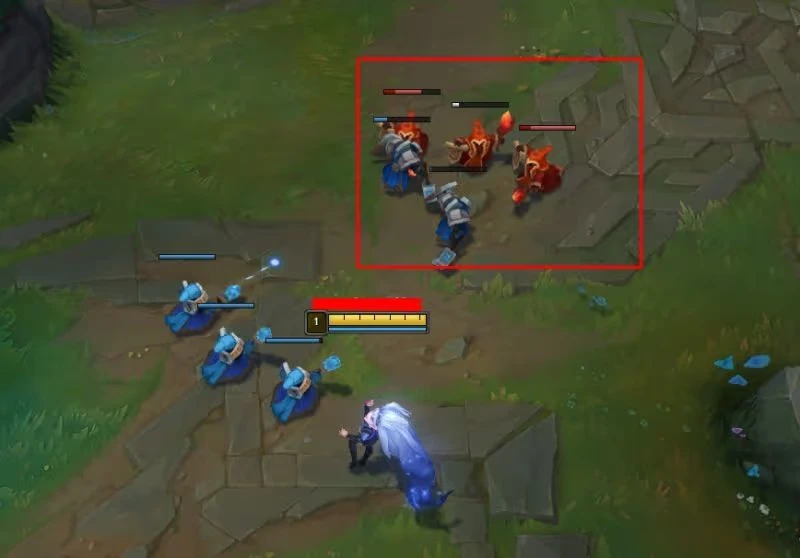
This assist tool helps you better understand the last-hit timings for your champion and eventually improves your understanding of the game.
Currently, the Last Hit Indicators are available in non-ranked modes, i.e., Co-op vs. AI, Tutorials, Swiftplay, Custom Games, Practice Tool, and RGM Summoner’s Rift queues.
Combined with the Practice Tool, the Last Hit Indicators can help you practice multiple scenarios like farming under the tower, farming when the waves clash, and various wave management techniques without having to deal with the opponents. Once the CSing timing is ingrained, you can add a bot and practice engaging an enemy or poking while maintaining your CS. Do not forget to practice the same in the Swift Play or Draft Pick game to understand how a real enemy would pressure.
The perfect CS score at 10 minutes is ~114. While practising without an opponent, you should aim to last hit every minion. In reality, during a game, anywhere between 65 and 95 is a respectable creep score.
The CS benchmarks at 10 minutes to hit for each lane area follow:
- Mid Lane (target: 80 CS/min)
- 7-9 CS/min (there are two waves in a minute and 12-13 total minions)
- Control Mages: 80-90
- Roaming Mids: 70-75
- ADC (target: 90 CS/min)
- 8-9.5 CS/min
- Strong lane: 85-95
- Weak Side or if pressure: 70-80
- Top Lane (Target: 70 CS/min)
- 6-8 CS/min
- Since melee matchups, the CSing is harder
- Aim for 80, but 60 is acceptable.
Practising methodically using the available tools will also help you avoid common mistakes like missing cannons while engaging an enemy, pushing too aggressively to get the minions, and ending up in a poor position where you can get traded.
Wave Management
Now that you understand the basics of CSing, the next step in understanding how to play around minions is Wave Management. To understand wave management, the first thing to understand is the wave crash, neutral crash, and wave pushing.
- Wave crash is when red and blue minion waves meet each other.
- Neutral crash is when the two waves meet in the middle of the lane.
- Wave Pushing is when your wave is bigger, i.e., an extra minion or two, this will slowly push the wave crash towards your enemy.
Once you understand these means, wave management becomes manipulating the crash’s location or disrupting it to create necessary conditions for yourself.
Neutral
This is the most naturally occurring wave state in a League of Legends game. In the Neutral wave state, you ensure that all the waves crash in the middle—Neutral crash.
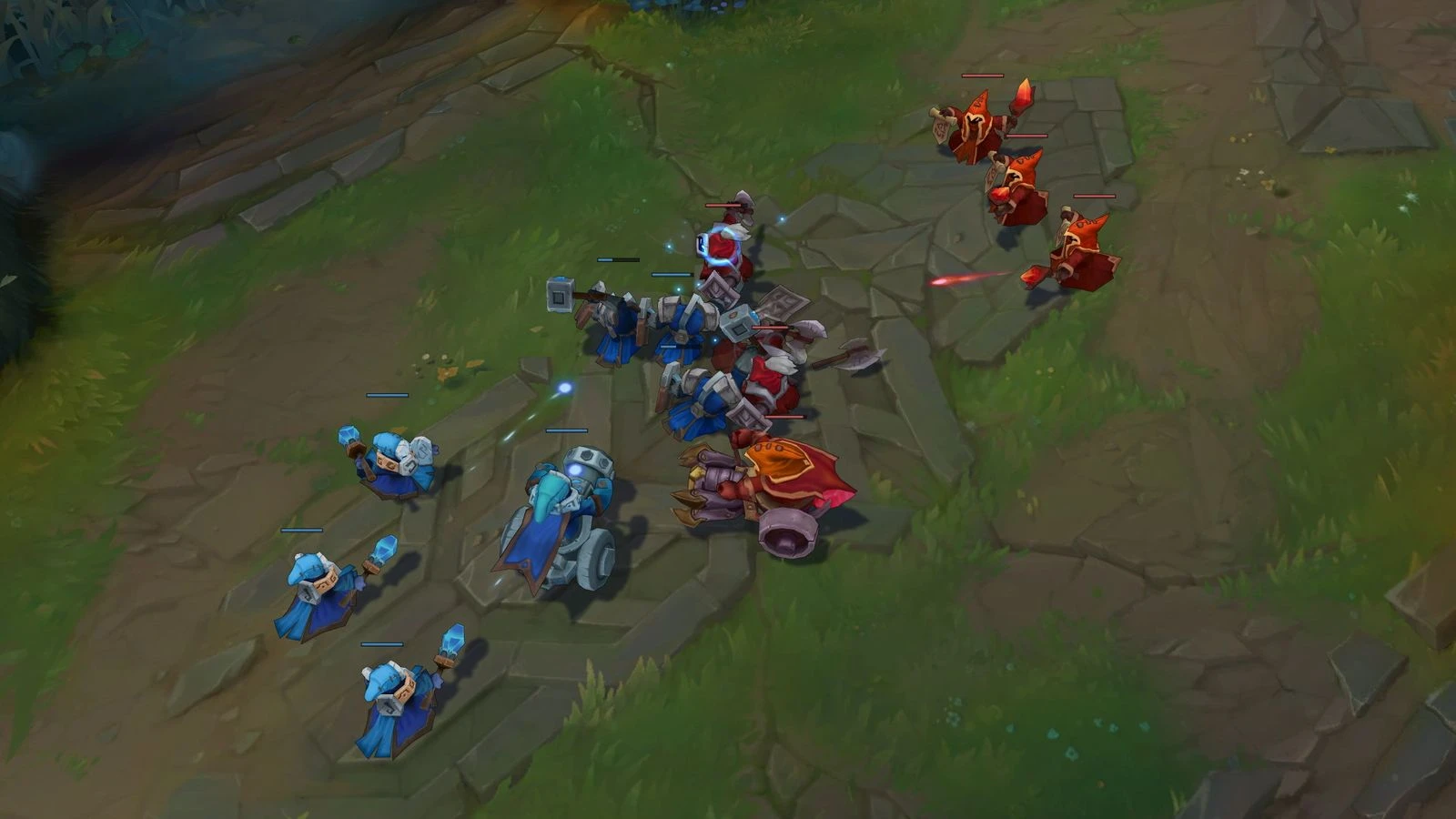
For a neutral wave state, you maintain the wave size to ensure the waves meet in the middle. You can either do it to simply farm or trade damage with your opponents. You can also maintain a neutral wave if you are unsure about your game plan.
Fast Push
Fast Pushing is clearing the minion wave as fast as possible using your abilities to aggressively push the wave crash towards your opponent’s tower.
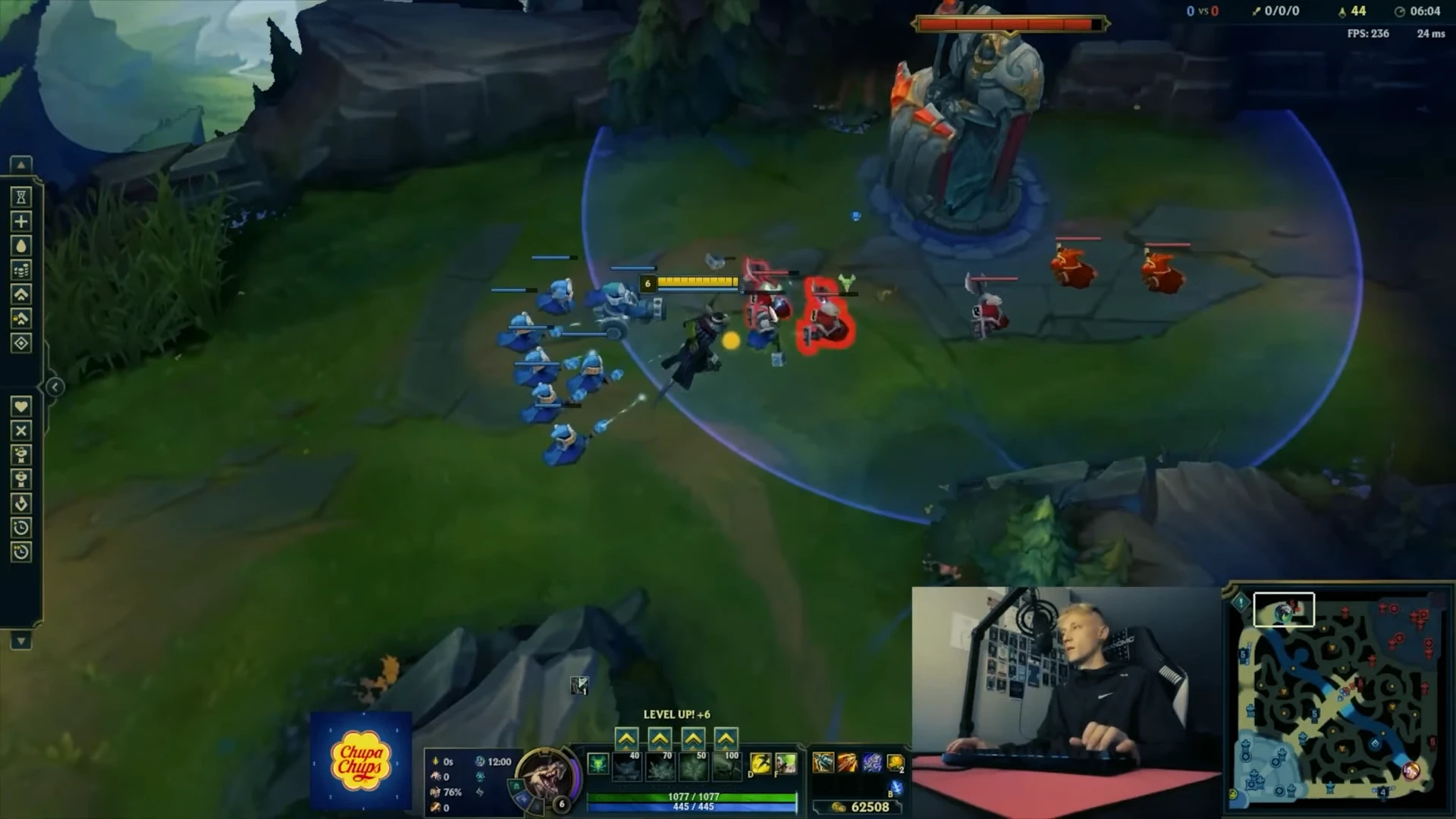
To fast push, you have to clear the opponent’s wave quickly, creating a minion advantage, which helps the waves to crash closer to your opponent’s turret. This wave state can be used offensively or defensively.
When using offensively, you clear the wave and use the extra minions on your side to pressure the opponent’s tower and take a turret plate or two. While hard pushing offensively, you have to be mindful of the enemy jungler and your cooldowns, or you will give away your advantage.
Defensively, fast pushing allows you to create a larger wave on your side and disengage to either reset or avoid a gank. This ensures you do not miss a wave after the recall.
Slow Push
To slow push, you hit the opponent’s wave before it crashes to create an advantage. This gives you a slightly bigger wave, which you maintain to slowly push the wave crash towards your opponent’s tower.
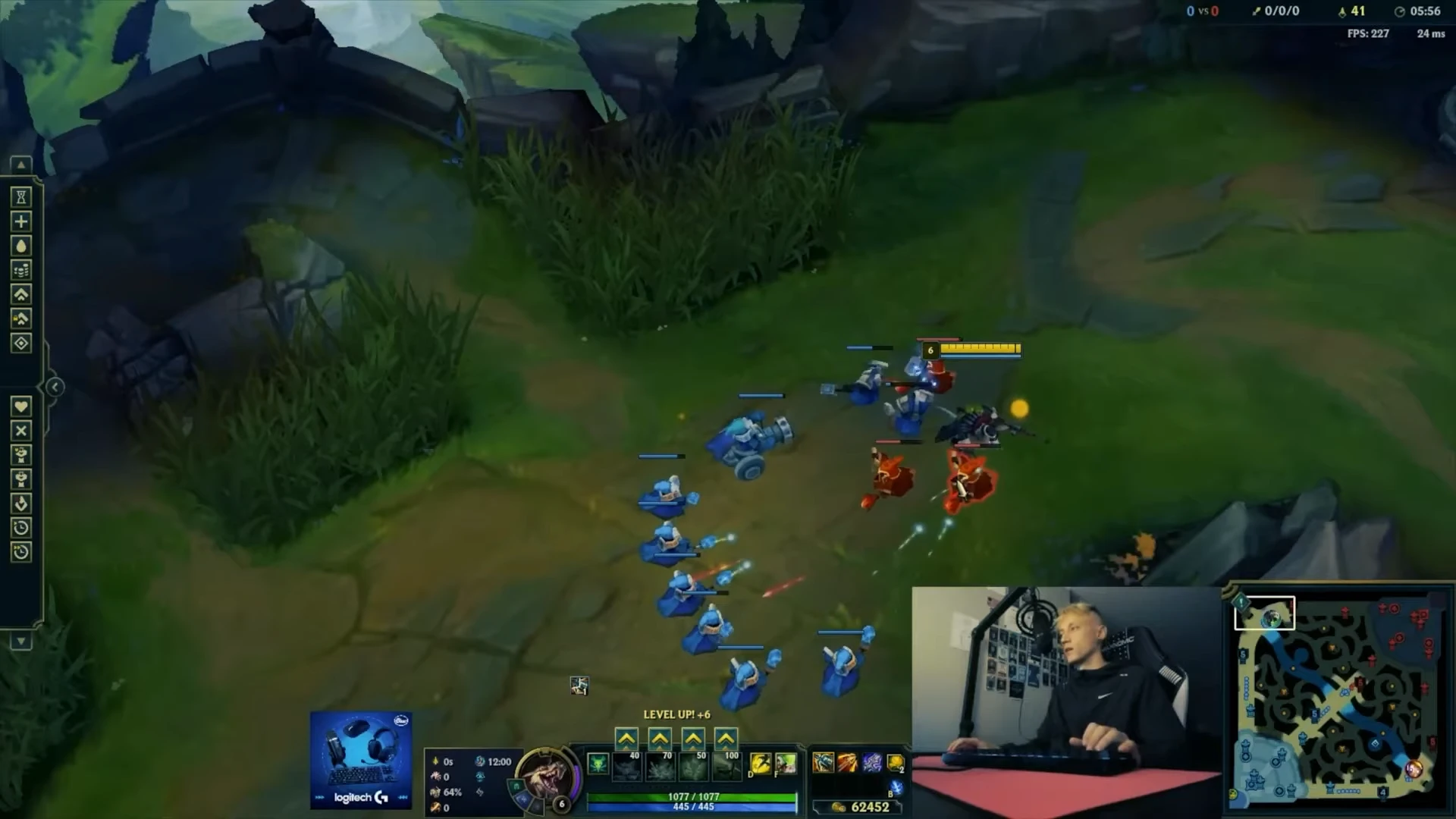
The difference between the fast and slow push is that with the slow, you do not clear the opponent wave; instead, you hit it early to get a minion advantage and then maintain it over the next few waves to push the wave crash.
This, in turn, gives you more control over the game’s tempo, as your opponent will have to deal with a stronger wave than you, creating trade opportunities.
Compared to fast pushing, slow pushing is much safer if executed properly. And as long as you are mindful, the chances of getting caught are much lower.
Freeze
Freezing a wave is essentially allowing the waves to crash just outside or closer to your tower while ensuring the wave doesn’t crash on your tower. To freeze a wave, you have to maintain a minion disadvantage on your side of the lane and then farm them when the waves crash.
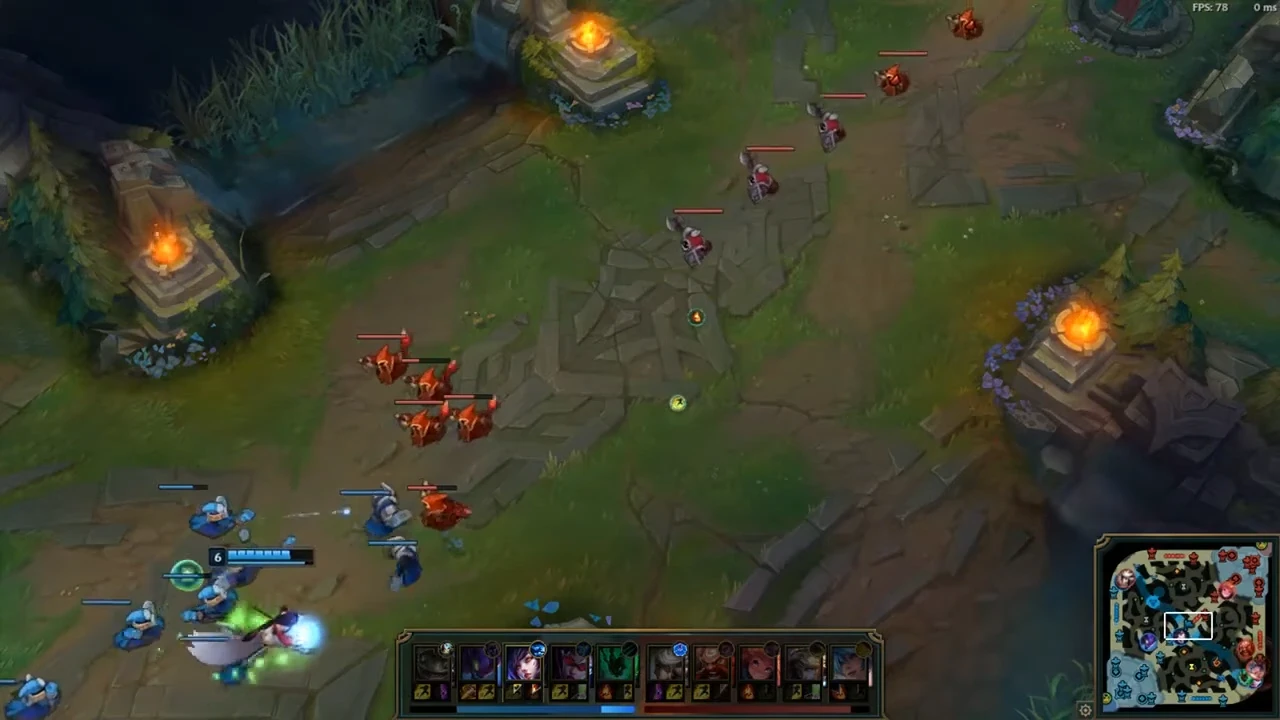
Unlike wave pushing, freezing requires you to allow the opponent to push the wave crash towards your tower and maintain the wave.
Freeze can be used to zone out the opponents while you farm the minions safely or create ganking opportunities for your jungler.
How to Use the Wave States?
Now that we know the different wave states, how do we use them? This comes down to understanding your team and the champion match-up.
If you are unsure about the match-up, you should maintain Neutral wave state, let the minions meet in the middle, and farm XP and gold.
If you know your champion has an advantage in your lane, slow pushing is the answer. This allows you to pressure your opponent and convert the pressure into a turret plating, damage, or a kill.
You can convert a slow push into a fast push when the enemy jungler is in a different lane. This helps you capitalise on the advantage you built into resources.
The only time you should default to fast push is when the enemy jungler is engaged, and you have a level and champion advantage over your opponent.
Learning how to freeze a wave is important if you are playing weak side. If you cannot win your lane without help or the opponent has a level advantage, you should freeze the wave outside your tower and farm levels to match the opponent.
Learning when your champion spikes can also help you make better decisions about what wave state to force and when to force it. If you get an item or level when your champion spikes, you can go from freeze wave state to fast push or slow push.
Now that you understand the wave states, you should use them according to the in-game conditions.
CS Targets and Wave Management by Game Stage
League of Legends is a complex game, and naturally, the CS targets and wave management goals depend on the stage of the game.
Let’s consider the following four stages of the game:
Early Game (0-10 mins)
In the early game, the goal is to maintain good CS and secure early advantages depending on the champion match-ups.
Ideally, the perfect CS score at 10 minutes is 114. But that is if you farm every minion. Realistically, however, anything above 80 is a great CS score. The benchmark, however, also varies by lane.
The CS score benchmarks at 10 minutes, depending on role, as follows:
- Top: 65-80
- Mid: 75-90
- ADC: 80-95
These can be ignored if you are securing objectives and early kills, as CS scores are about getting resources and maintaining control.
Mid Game (10-20 mins)
During mid-game, maintaining CS scores becomes secondary to map objectives. After the early game, players usually go to the lanes where they can farm waves easily under their tower.
The neutral objectives on the map get higher priority during the mid game, and ignoring them and farming CS can cost your team the game.
Late Game (20+ mins)
Similar to mid-game, during late game, team fights take priority, and neutral objectives get priority. While that doesn’t mean ignoring the minions, but being more mindful of the minion wave instead of CS itself.
Always grouping up mid and pushing isn’t the answer either. But you should push on all three lanes or either two lanes to gain map control across the rift.
After you secure a Baron/Elder buff, the objective becomes using the empowered waves to secure control of the game. The buffed minions are harder to clear, and allow you to push towards your opponent’s base.
Understanding the current objective and adjusting your game plan according to the requirements of the game is the essence of learning and winning League of Legends.
Advanced Tips
Now that we understand the importance of the minions and the wave management, let’s take a look at how we can use the knowledge to tackle different scenarios.
For starters, when you find yourself in an unfavourable match-up, you should freeze the wave. This allows you to farm the minions safely, but also opens ganking possibilities.
In case the match-up favors you, you can use the minion advantage to push the enemy and the wave back to secure objectives or kills. In such cases, vision control becomes critical, as fast pushing opens you to ganks.
Good vision control also opens avenues for more aggressive minion farming and zone out your opponent to cut off their access to the resources.
How to Practice?
To practice everything mentioned in the guide, you can use the Practice tool available in League of Legends.
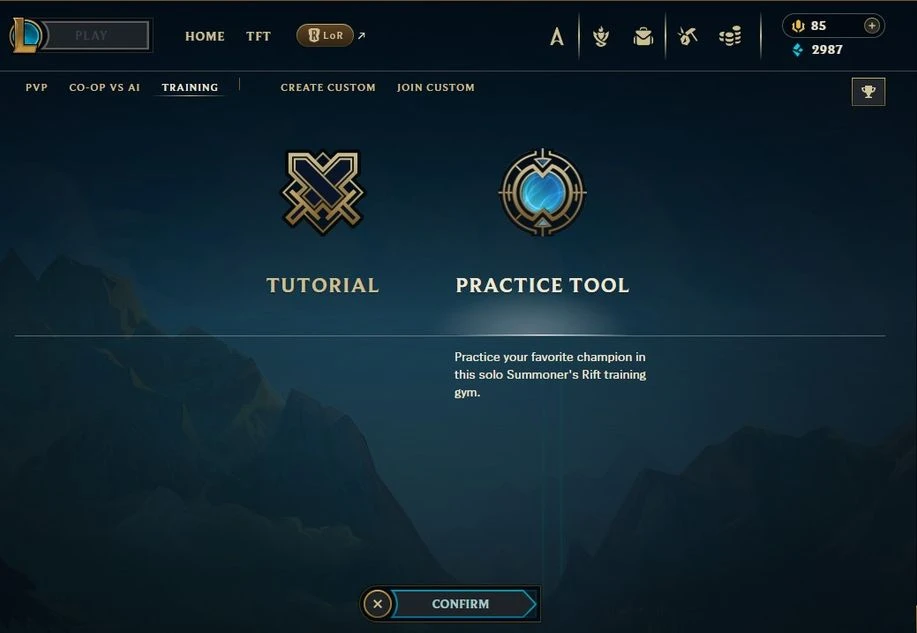
For starters, the Last hit indicators will help you internalise last-hitting/CSing. You can introduce a bot in your game to simulate the pressure an enemy puts on you while you farm minions. You can also practice wave management the same way.
Once you understand minions, CS, and wave management, you’ll have an easier time levelling up and hitting your champion spikes. This, in turn, helps you create small pockets of advantage that can compound over time to win the game.
Catch the LCK action live to watch how the best laners in the world approach wave management. Alternatively, you can watch LEC, LPL, and LCS to observe how other regions tackle the same problems differently.
To follow the full LoL tournament schedule across LCK, LEC, LCS, and LPL — including upcoming match dates and results — check Strafe’s LoL esports schedule.




0 Comments