

Noxus in League of Legends isn’t just “the villain empire.” It’s a ruthless idea turned into a nation: strength above all – tested in battle, politics, invention, magic, and ambition. From the shadow of the Immortal Bastion to border provinces that shift with every campaign, Noxus is built on pressure and forward motion.
To outsiders, it’s brutal and expansionist. To many Noxians, it’s the only honest system in Runeterra: prove your worth, rise as far as you can, and keep improving – because the moment you stop being tested, you start getting weak.
Noxus at a glance
- Region: Noxus (Runeterra)
- Capital: The Immortal Bastion (Noxus Prime)
- Who rules Noxus? The Trifarix (Might, Vision, Guile)
- Key factions: Trifarian Legion, the Black Rose
- Approach to magic: weaponized (useful magic is embraced)
- Known for: conquest, “meritocracy,” espionage, and forbidden power
Noxus champions
Noxus has one of the most iconic champion rosters in the game, because its values create strong archetypes: the unstoppable war leader, the master assassin, the hidden cultist, the demon-touched strategist. Some champions embody Noxian ideals proudly, while others exist as consequences of the empire’s hunger.
Below is a quick visual lineup of major Noxus champions, followed by a table explaining how each one connects to Noxus lore.


| Champion | Connection to Noxus |
|---|---|
| Ambessa | A Noxian warlord tied to imperial expansion through power, politics, and ruthless strategy. |
| Briar | A living weapon born from Noxian experimentation, showing how the empire will weaponize anything that works. |
| Cassiopeia | A Du Couteau noble transformed while pursuing ancient power in Shurima for Noxian and Black Rose schemes. |
| Darius | The Hand of Noxus and Trifarix seat of Might, commander of the Trifarian Legion. |
| Elise | An agent of the Black Rose who trades in occult power and Shadow Isles connections, including Vilemaw worship. |
| Draven | Gladiator icon and propaganda powerhouse who turns violence into spectacle and recruitment for Noxus. |
| Katarina | Elite assassin of House Du Couteau, shaped by Noxian doctrine that results matter more than reputation. |
| Kled | A legendary Noxian cavalryman whose chaotic campaigns helped cement conquest as a way of life. |
| LeBlanc | The Black Rose’s mastermind, manipulating Noxian politics through illusion, influence, and long games. |
| Mel | A Medarda figure whose story highlights Noxus’ diplomatic reach and how influence can replace open war. |
| Mordekaiser | The Iron Revenant whose ancient tyranny shaped the Immortal Bastion and seeded Noxus’ darkest legacy. |
| Rell | A runaway prodigy forged by Black Rose cruelty, now trying to tear down the system that made her. |
| Riven | A former Noxian soldier haunted by the Ionian invasion, showing the personal cost of conquest. |
| Samira | A thrill-seeking mercenary who embraces the Noxian ideal of proving strength through danger and skill. |
| Sion | War hero resurrected as an undead battering ram, proof that Noxus pushes “strength” past death. |
| Smolder | A young dragon tied to Noxian beastmasters and the empire’s interest in rare creatures as assets. |
| Swain | Grand General and Trifarix seat of Vision, a demon-touched strategist who remade Noxus after Darkwill. |
| Talon | A lethal shadow within Noxus’ assassin culture, linked to the Du Couteau legacy and internal power struggles. |
| Vladimir | An ancient hemomancer entwined with the Black Rose and the occult underbelly of the Immortal Bastion. |

Other champions related to Noxus
Noxus affects far more champions than those born under its banner. Some were prisoners, some were enemies on the battlefield, and others became tools of Noxian expansion through spycraft, deals, or chemical warfare.
| Champion | Connection to Noxus |
|---|---|
| Alistar | A former prisoner of Noxus who survived its brutality and escaped, carrying the scars of the empire’s “strength” culture. |
| Annie | Daughter of the Gray Order’s exiles of House Hastur, tied to Noxus through family origin and exile politics. |
| Caitlyn | Investigates Noxian spy networks operating in Piltover, highlighting Noxus’ preference for infiltration over open war. |
| Camille | Also investigating Noxian espionage in Piltover, reflecting how Noxian intelligence threatens trade hubs. |
| Galio | Has fought Noxians in the past, representing Demacia’s military resistance to Noxian expansion. |
| Gangplank | Stole Swain’s flagship, The Leviathan, and raided Noxian ships, fueling bad blood between Bilgewater and Noxus. |
| Garen | Veteran of Demacia’s conflicts against Noxus, tied to the long-running rivalry between the two powers. |
| Irelia | Severed Swain’s left arm during the Noxian invasion of Ionia and became the face of Ionian resistance. |
| Jarvan IV | Swain’s political and military nemesis, embodying Demacia’s refusal to bend to Noxian ideology. |
| Karma | Defended her people by confronting Noxian invaders, showing how the invasion forced even pacifists into war. |
| Karthus | Once a corpse collector in Noxus’ slums before defecting to the Shadow Isles, linking Noxian hardship to darker paths. |
| Kayn | Noxian by birth and a former soldier during the Ionian campaign, shaped early by Noxus’ war machine. |
| Lee Sin | Fought off Noxian invaders during the Ionian invasion, representing spiritual resistance to conquest. |
| Master Yi | Fought Noxian forces during the Ionian war; after chemical fire destroyed his home, he went into exile. |
| Quinn | Captured a Noxian assassin, reflecting the stealth-and-counterstealth war between Demacia and Noxus. |
| Ryze | Born in Khom of the ancient Noxii, tying Noxian ancestors to the Rune Wars era and world-shaping magic. |
| Sett | Has a Noxian pit-fighter father, showing how Noxian violence and spectacle can echo across borders. |
| Singed | Hired by Noxus for chemical warfare during the Ionian invasion, leaving scars that still define the conflict. |
| Sivir | Formerly employed by Cassiopeia, linking Shuriman mercenary work to Noxian noble schemes. |
| Taliyah | A former Noxian-employed stone mage, showing how Noxus recruits (and exploits) rare talent. |
| Thresh | Visited and attacked a Noxian inn after becoming unbound from the Shadow Isles, bringing the Mist’s horror to Noxian soil. |
| Urgot | Tricked by Swain into traveling to Zaun, illustrating how Noxus “handles” problems through exile and misdirection. |
| Veigar | A yordle driven mad by imprisonment in the Immortal Bastion, one of Noxus’ most infamous prisons. |
| Xin Zhao | Captured by Noxian forces and forced into the Fleshing arena, surviving a system built to break prisoners into legends. |
The history of Noxus
Noxus history reads like an escalating series of “wins,” followed by consequences. Its heart is the Immortal Bastion, an ancient fortress tied to Mordekaiser’s tyranny, the Black Rose’s secrets, and the modern empire’s obsession with strength. Noxus began as fierce tribes, became an empire, and now runs on a ruling doctrine designed to stop a single leader from destroying the nation through madness or corruption.
Quick timeline of Noxus lore
- Mordekaiser era: the Immortal Bastion becomes the center of a terrifying empire.
- Black Rose influence: secret magic and political manipulation shape Noxus from within.
- War with Demacia: rivalry turns into legend, propaganda, and long-term hatred.
- Invasion of Ionia: conquest meets organized resistance and lasting consequences.
- The Trifarix: power is divided into Might, Vision, and Guile to prevent a single tyrant.

Video: Welcome to Noxus (2025 Season 1 Cinematic)
This cinematic is one of the clearest “mission statements” Noxus has ever gotten. It frames the empire as a magnet for the fearless, daring them to answer one question: are you strong enough? If you watch closely, it also hints at how Noxus views other regions as opportunities, rivals, or lessons paid for in blood.
The narrator frames Noxus as a gathering place for the strong; the dialogue later pivots into strategy – mentioning Piltover as a “lesson,” warning that calamity is always approaching, and arguing Noxus must be bolder rather than safer.
Age of tyranny: Mordekaiser and the Immortal Bastion
Long before modern Noxus, sorcerers tried to resurrect a dead warlord as a weapon. It didn’t go their way. Mordekaiser returned, killed the mages who summoned him, and forged an empire from terror. The Immortal Bastion became the center of his power – an architectural warning to the world and a vault of arcane secrets. He even formed the Black Rose as an inner circle of mages, tying the cabal’s origins to the darkest period of Noxian history.
Video: The Root of Empire (Origins of Noxus)
This short origins piece captures the tone of Noxus history: strength born from hardship, then reshaped into ideology. It also hints at the uncomfortable truth that “history” can be cultivated – seeded and guided by hidden hands.
What makes this era so important is that it never really ends. Mordekaiser’s shadow still hangs over the Bastion, and the Black Rose remains a living reminder that Noxus doesn’t just conquer with armies – it conquers with secrets.
Death to the king: Sion and the Demacian rivalry
The war with Demacia helped define Noxus as the empire Runeterra fears. The legend of Sion – who fought through blades and spears to choke a Demacian king to death – became a national myth. Noxus celebrates the act because it proves a core belief: status means nothing if you cannot hold it by force. Demacia remembers it as proof of Noxian barbarism. Both are right, which is why the rivalry never really cools.
Invasion of Ionia: when the land fought back
Noxus invaded Ionia believing its focus on enlightenment meant weakness. Instead, Noxus found something new: a people, and even a land, capable of resisting through spiritual power, guerrilla defiance, and unity forged by invasion. The turning point is inseparable from Irelia’s uprising and Swain’s loss, and it becomes the moment where Noxus learns that conquest is not always just logistics and brutality.
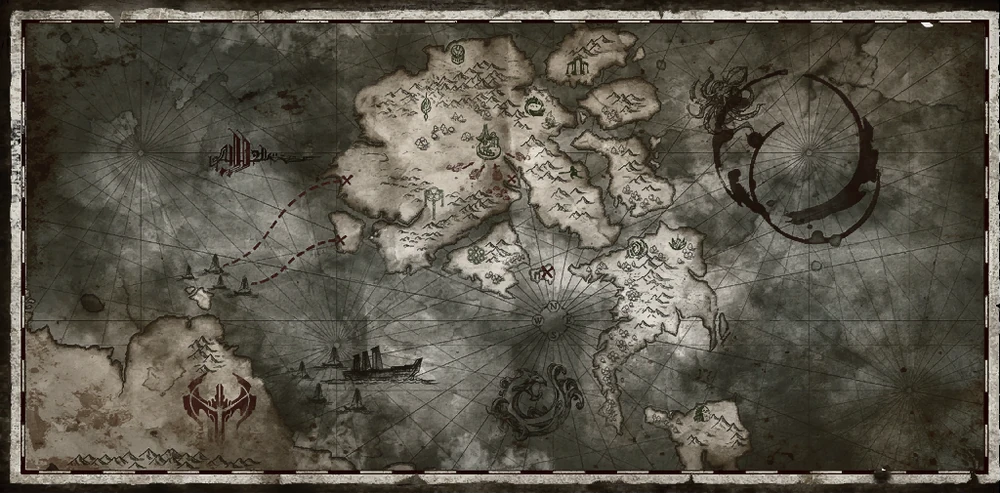
Video: Tales of Runeterra – Noxus (“After Victory”)
If you want the clearest snapshot of how Noxus justifies conquest, this cinematic is it. It frames occupation as “ending kings” and offering citizens a brutal kind of opportunity: stand up, become strong, and take your place, or be crushed.
The uncomfortable part is that the pitch can be real. In Noxus, birth matters less than ability – at least in theory. That’s why conquered people sometimes do rise. Noxus’ “meritocracy” is a blade: it can cut chains, and it can cut throats.
The Trifarix revolution: Might, Vision, and Guile
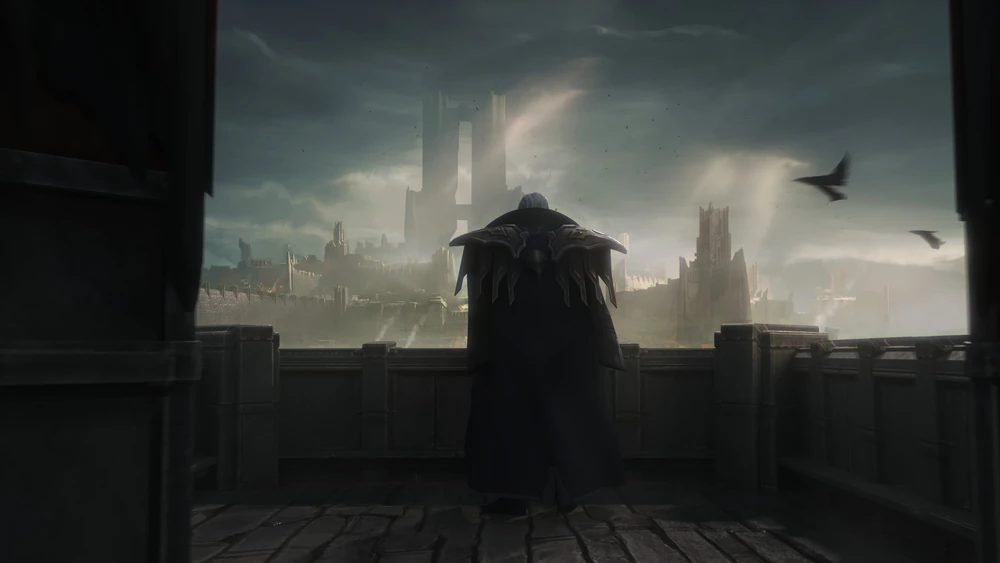
Swain’s coup ends the era of emperors and replaces it with the Trifarix: three leaders embody the Principles of Strength. It’s a system built to prevent a single ruler from dragging Noxus into collapse, while also making Noxus more efficient at projecting power. Darius becomes Might. Swain becomes Vision. The third seat, Guile, remains officially faceless, which is exactly how fear spreads.
| Trifarix seat | Principle | What it means in practice |
|---|---|---|
| Darius | Might | Military command, discipline, and the elite Trifarian Legion. Noxus’ hard power. |
| Swain | Vision | State strategy, long-term planning, and knowing which wars matter, and which are traps. |
| The Faceless | Guile | Espionage, subterfuge, internal stability, and influence people notice too late. |
How Noxus holds an empire together
Noxus isn’t held together by the Trifarix alone. Conquered cities are typically run by stewards, provincial rulers who enforce Noxian law and keep the empire’s borders moving. Behind them are warmasons – warrior-spies and builders who stamp Noxian authority onto new territory through logistics, infrastructure, and propaganda.
That’s why Noxian expansion doesn’t only look like marching armies. It can look like new gates on the road, a new chain of command, and a local elite being replaced (or absorbed) into a system that rewards results.
Video: The Reckoners (Origins of Noxus)
This piece leans into the ritual side of Noxian identity – strength as legacy, strength as truth, strength as the only thing that remains when politics burns away. It’s the worldview that turns ordinary soldiers into believers.
It also explains why Noxus keeps expanding: conquest isn’t just economics – it’s identity. A Noxus that stops testing itself risks becoming weak, and weakness is the one unforgivable sin.
Locations of Noxus
Noxus spans inhospitable steppes, mined mountains, coastal ports, and occupied territories across continents. Its geography is part of its philosophy: hard land makes hard people. And the empire’s most famous landmark – the Immortal Bastion – stands like a scar that never healed.
- The Immortal Bastion (Noxus Prime): The capital fortress-city, home to noble houses, the Trifarix’s seat, and persistent Black Rose rumors.
- Delverhold (North): A mining fortress-province that feeds Noxus weapons and armor through endless quarry work.
- Basilich (South coast): A major port with a history of rebellion, proof that conquest creates friction even inside the empire.
- Trifarian strongholds: Training grounds and command centers tied to the Trifarian Legion and Noxus’ military culture.
- Arenas and spectacle districts: Places where violence becomes entertainment, tied to Noxian propaganda and recruitment.
- Occupied territories: Noxian holdings in parts of Ionia and northern Shurima, often governed by stewards enforcing Noxian law.
Noxian culture
Noxians respect strength above all, but “strength” is broader than outsiders assume. Martial power matters, yes – but so does political skill, invention, leadership, trade, and magic. That’s why Noxus can absorb people from many backgrounds and still function as a single machine: anyone can belong if they prove useful and resilient.
This is also where Noxus becomes genuinely complicated. Assimilation can improve lives for some conquered citizens, especially those trapped under rigid hierarchies elsewhere. But the offer is still backed by annihilation: accept Noxus and be judged by worth, or refuse and be crushed. It’s an empire that can uplift you – and still be evil while doing it.
Video: “Arcane” perspective – Noxus and the Black Rose (fan breakdown)
For a broader, modern pop-culture view of Noxus – especially the Black Rose, centuries of manipulation, and how Noxian politics can spill into places like Piltover – this long-form breakdown is the kind of recap many lore fans use to connect dots across different stories.
Keep in mind it’s a creator interpretation, but it’s useful for understanding why Noxus often feels like a “shadow empire” even when its armies aren’t on screen: the war can arrive as a treaty, a spy network, or a single masked patron with the right leverage.
Noxus and its relationships with other regions
Noxus doesn’t exist in a vacuum. It pressures borders, destabilizes neighbors, and forms alliances of convenience. These connections are a huge reason why Noxus lore is so central to Runeterra’s wider story.
- Demacia: ideological rival – anti-magic tradition versus Noxian weaponization of power.
- Freljord: long, grinding clashes where Noxus learns that “strong” doesn’t always mean “easy to conquer.”
- Ionia: a scar that never fully closes, with resistance, occupation, and the threat of renewed war.
- Piltover and Zaun: trade routes, infiltration, and chemistry – sometimes diplomacy is the invasion.
- Bilgewater: pirate opportunism colliding with Noxian naval power and personal vendettas.
- Shurima: occupation and plunder in the north, with ancient power always tempting Noxian nobles.
Trivia and details that make Noxus feel real
Noxus lore shines in the small details: the symbols they fly, the structures they build, and the way the empire turns conquest into culture. These facts and worldbuilding touches help explain why Noxus feels less like a cartoon villain and more like a functioning power in Runeterra.
- The Trifarix symbol isn’t just decoration: Noxus’ crest mirrors the state’s doctrine – Vision, Might, and Guile – as one unified identity. The point is simple: strength is a system, not a single hero.
- Noxtoraa gateways are propaganda you can walk under: when Noxus conquers or absorbs a territory, it stamps the roads with towering gateways as a message to locals and travelers – you’re entering Noxian order now.
- Warmasons “build the empire” after the army wins it: Noxus uses engineers, architects, and warrior-stewards to reshape conquered cities fast—fortifications, roads, law, and symbolism – so conquest becomes normal life.
- Noxus runs on stewards, not just generals: provinces and occupied regions are often governed by stewards who enforce Noxian law, taxes, and recruitment. It’s one reason the empire can expand without collapsing immediately.
- It’s a “meritocracy” with a knife edge: in theory, anyone can rise through skill – soldier, inventor, mage, diplomat. In practice, it creates constant pressure: every promotion is a challenge, every weakness gets hunted, and internal rivals can be deadlier than foreign enemies.
- The Immortal Bastion has layers of history: it’s not only the capital – it’s a monument to ancient tyranny and secret magic. That’s why so many Noxian stories feel like politics happening on top of a buried curse.
- Noxus weaponizes magic instead of banning it: where some regions fear magic, Noxus treats it like steel – dangerous, useful, and worth mastering. That mindset is a big reason the empire attracts outcasts and ambitious mages.
- Violence is also entertainment: arenas, public duels, and “prove yourself” spectacle turn brutality into culture—and into recruitment. Noxus doesn’t just conquer; it sells the idea that conquest is honorable.
- The Black Rose makes Noxus feel haunted: even when the empire looks unified, rumors of hidden patrons, centuries-long plots, and forbidden rituals keep citizens and enemies guessing who is really steering the machine.
- Noxus’ reach brushes the supernatural: cults, artifacts, and Shadow Isles-adjacent horrors show up at the edges of the empire’s ambition—because if power exists, someone in Noxus will try to use it.
- Real-world echoes are intentional: Noxus borrows the vibe of historical expansionist empires – especially Roman-style imagery—because it frames conquest as “civilization,” not just violence.
Frequently asked questions about Noxus
What is Noxus in League of Legends lore?
Noxus is an expansionist empire in Runeterra that values strength above all. In Noxian culture, “strength” can mean combat power, leadership, strategy, invention, magic, and the ability to keep improving under pressure.
Who are the Noxus champions in League of Legends?
Noxus champions are characters tied directly to the empire through birth, service, politics, or Noxian institutions like the Trifarix and the Black Rose. Examples include Darius, Swain, Katarina, Draven, LeBlanc, Riven, and others connected to Noxus history and power.
Who rules Noxus in League of Legends?
Noxus is ruled by the Trifarix, a council of three leaders representing Might, Vision, and Guile. Darius holds the seat of Might and Swain holds the seat of Vision. The third seat (Guile) is officially known as “the Faceless.”
What is the Trifarix in Noxus lore?
The Trifarix is the ruling system that replaced Noxus’ old empire leadership. It divides power into three roles so no single ruler can control everything, and it keeps Noxus focused on military power, long-term strategy, and internal control.
Why did Noxus invade Ionia in the lore?
Noxus invaded Ionia for strategic value and resources, and because Noxian leadership believed Ionia would be easy to conquer. Instead, the war became one of Noxus’ most costly conflicts and helped unite Ionian resistance across the region.
What is the Black Rose in Noxus, and what do they want?
The Black Rose is a secretive group operating inside Noxus through political influence, hidden magic, and long-term manipulation. It is strongly associated with LeBlanc and is tied to centuries of power struggles linked to the Immortal Bastion and Noxus’ darkest history.
Is Mordekaiser part of Noxus in the lore?
Mordekaiser is tied directly to Noxus through the Immortal Bastion and the ancient empire that existed before modern Noxus. His legacy shaped the region long before the Trifarix and today’s politics.
Is Riven still a Noxus champion in the lore?
Riven is a Noxian by origin and military service, but her story is defined by what happened during the Ionian invasion and what she becomes after it. She remains one of the most important characters connected to Noxus’ consequences.
Noxus in the wider world of Runeterra
Noxus is the pressure system of Runeterra: it forces other nations to define what they stand for. Demacia becomes more rigid in response. Ionia becomes more unified through resistance. Even trade hubs like Piltover and Zaun can’t ignore Noxian influence forever, because Noxus doesn’t only arrive on ships – it arrives as opportunity, leverage, and fear.
If you want to explore more Runeterra region guides, here are the key areas connected to Noxus’ story (directly or indirectly):
You can also browse our full LoL lore hub for more deep dives, region guides, and story breakdowns.
For official canon, art, and biographies, the best starting point is League of Legends Universe. For game updates and official announcements, check leagueoflegends.com and Riot Games. If you want a general overview of the game itself, League of Legends on Wikipedia is a useful reference. And if you’re looking for community discussion and esports streams, you’ll find endless debate on r/leagueoflegends, clips on Twitch, highlights on YouTube, and updates via X and Instagram.




0 Comments