

Season 1 2026 is not a small reset for League of Legends. It is a structural overhaul of how games flow from level 1 to late game: a Demacia-themed Rift, role quests for every lane, faster starts, major objective and turret changes, nine new items, returning classics like Hextech Gunblade, big ranked system updates, Swiftplay reworks and WASD controls leaving PBE.
This preview walks through the most important League of Legends season 1 2026 changes in a way that you can actually read without feeling like you’re skimming a PDF of patch notes. You’ll see where the game is headed, what it means for each role, and where to dig deeper if you want raw numbers or dev-level detail.
Think of this as your “big picture” overview before you start worrying about exact builds, tier lists or which champ just got quietly broken by a new item.
Season 1 2026 overview: Demacia’s golden age
Season 1 2026 is themed around Demacia in its golden age – the city-state as a symbol of unity, hope and justice, before all the messy politics of modern Runeterra. Summoner’s Rift itself reflects that theme: petricite stone, gold details and deep blue accents replace the previous year’s darker, more ominous look.
Alongside the map update, Riot is anchoring the season with:
- A January cinematic focused on Demacian champions
- Demacia-inspired act 1 battle pass skins, including a Prestige skin for Morgana
- A focus on “classic Demacia” as a bright, aspirational faction rather than purely militaristic
If you want the short official rundown, Riot’s own summary in the Season 1 2026 TL;DW dev post hits all the big talking points and pairs nicely with this more in-depth preview.
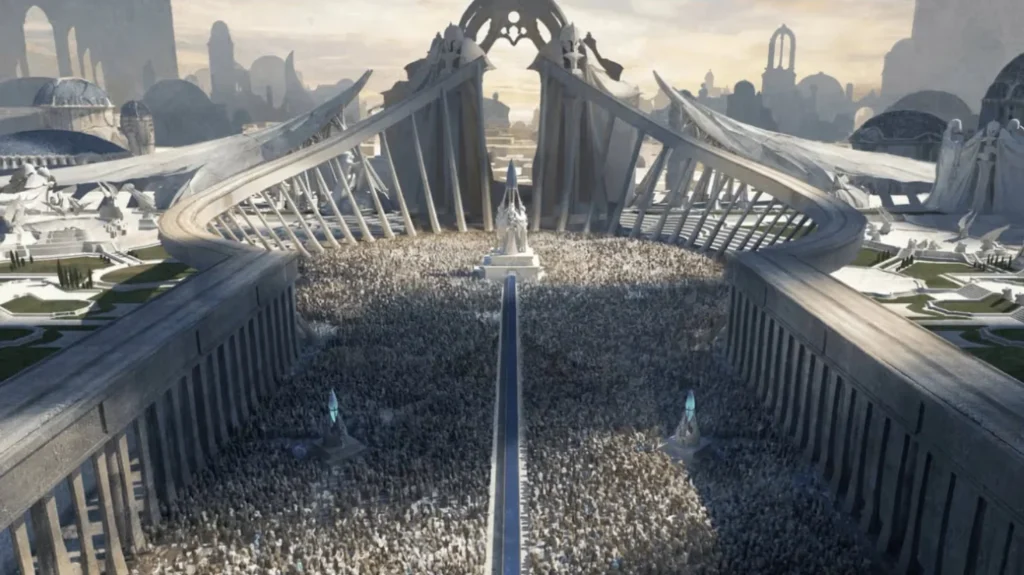
The clearest way to get a feel for the tone of League of Legends season 1 2026 is still the final Dev Update of 2025, where Pabro, Meddler, Phreak, Riot Endstep, Dashijador and Riot CallMeKT walk through the theme, gameplay pillars and upcoming systems.
Watch the official Dev Update here:
At a high level, season 1 2026 revolves around two big goals: reduce objective fatigue and bring back real strategic variety. For the last few years, too many games have turned into “fight every neutral, stack Feats, flip Atakhan, flip Elder.” Riot’s answer is to trim that system back, give teams more agency through pushing and split-pushing, and make sure every role has its own distinct way to influence the outcome.


Faster early game and less objective fatigue
One of the most immediate changes you will feel in January is how quickly games get going in season 1 2026.
Instead of standing under your tier 1 tower for over a minute while nothing happens, the early game is now tuned to push you into meaningful decisions almost right away:
- Minions now spawn at 30 seconds instead of 65
- Jungle camps, from Raptors to Rift Scuttler, also spawn 35 seconds earlier
You can still level 1 invade, but there is far less “free time” to wander around aimlessly. Teams that come in with a clear plan for the first wave, first ward and first clear will have a noticeable advantage.
On the objective side, Riot is directly tackling the feeling that every game is a checklist of things you must kill:
- Atakhan and his Blood Roses are completely removed from Summoner’s Rift
- Feats of Strength are removed as well
- Baron Nashor returns to a 20:00 spawn timer
- First Blood and First Turret bonus gold return
- Epic monsters are about 15% more durable, with stat scaling tied more tightly to champion levels
The combination of fewer mandatory objectives and slightly tougher epic monsters means teams have more room to opt into cross-map trades or side lane pressure. Objectives still matter a lot, but they are no longer the only way to close out games.
If you want to see the design reasoning and some early numbers, the official 2026 season one gameplay preview breaks down the goals behind these changes. For ongoing announcements and tweaks as Riot reacts to PBE feedback, the official League of Legends news page gives you the “straight from the source” perspective, while we track the same beats from a player-first angle on the LoLNow news hub.
Pushing and split pushing matter again
For years, the game has quietly pushed players away from split-pushing and into mid-centric 5v5 deathballs. League of Legends season 1 2026 deliberately reverses that trend.
Several systems work together to make pushing and sieging rewarding again:
- Crystalline Overgrowth: towers slowly grow crystalline formations over time. When a champion hits the turret, those crystals detonate and deal a burst of extra damage, scaled by how much has built up. Even low-DPS champions can meaningfully threaten towers if given a window to hit them.
- Demolish rework: the Demolish rune is simplified into a three-hit passive. Hit a tower three times in a row and you get a clear, satisfying burst of extra damage.
- Permanent turret plates: outer turret plates now stay up for the whole game, and inner plus inhibitor towers also gain plates. Riot is not adding extra gold overall; instead, the existing tower gold is spread across these plates.
- Nexus turret respawns: when Nexus turrets respawn, they now return at 40% HP instead of full health, making it always correct to finish them off instead of leaving them low for “safety.”
- Improved Homeguards: the Homeguard speed boost now lasts until you reach your outer turret, and later extends to the furthest pushed minion wave in each lane. The buff ends if you cut through the jungle or river, encouraging lane-centric rotations.
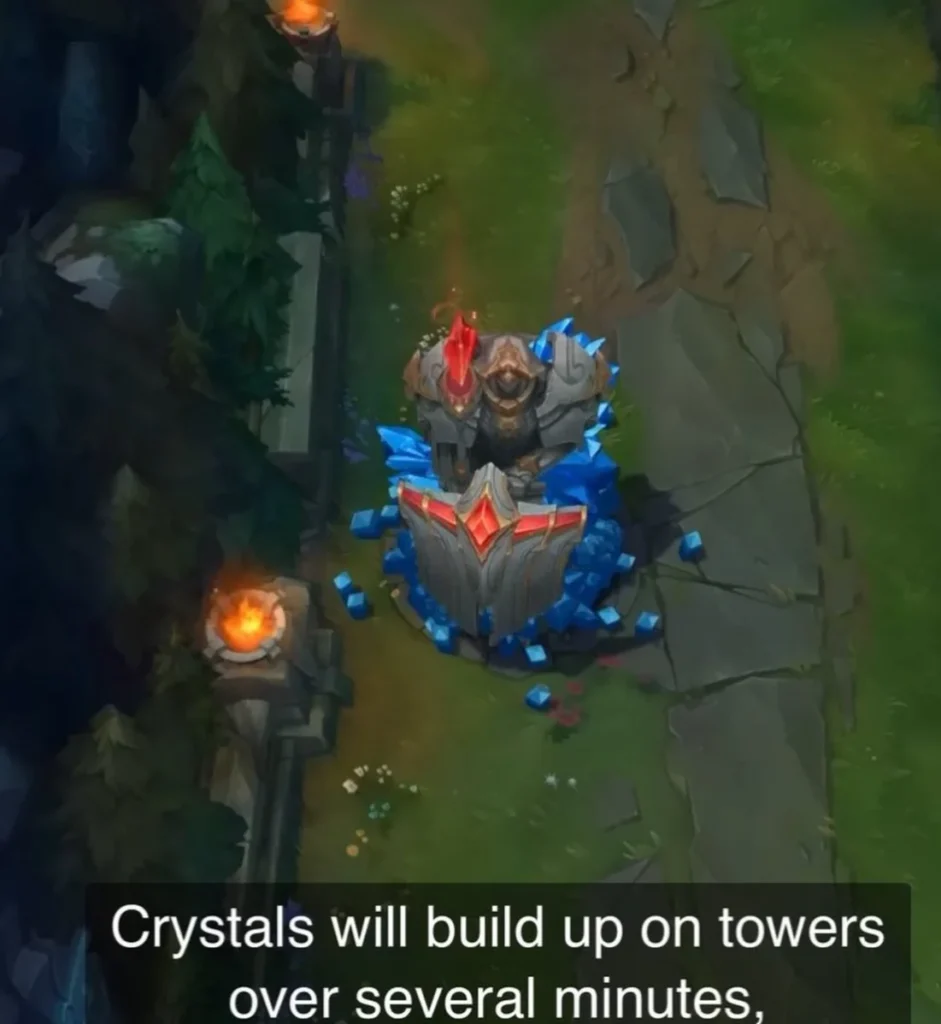
Minion waves are also tuned to support more frequent, higher-pressure pushes. After laning ends, waves spawn more often but with slightly fewer minions per wave, so there are more windows to shove lanes, threaten towers and force the enemy to choose between defending or contesting an objective.
The result is a map where side lane pressure matters again. A fed split pusher who understands wave timings and Overgrowth windows can create enormous pressure without ever touching Baron, especially when you combine these changes with the new role quests.
Role quests and how each lane scales in 2026
The biggest philosophical change in season 1 2026 is the introduction of role quests for every lane. Jungle and support have had quest-like items for a while; now top, mid and bot get their own tailored progression systems too.
Your role quest is determined by the position you are assigned in the lobby. If you swap roles with a teammate, you need to perform an official role swap in champion select, or you will complete the wrong quest for your actual lane.
You progress each quest by doing normal League of Legends things: last-hitting minions, taking plates and towers, fighting champions and helping secure epic objectives. Once finished, you unlock a unique, role-specific power spike that changes how you think about the mid and late game. If you are brand new to the game and wondering what all these roles even are, the overview on the League of Legends Wikipedia page is still a surprisingly good primer.
Top lane: teleport, extra experience and level 20
Top lane has long suffered from the feeling of “I won lane, but the game was decided elsewhere.” Riot wants to give top laners enough systemic power that their performance genuinely affects the outcome.
When a top laner completes their role quest, they gain:
- A free version of Summoner Teleport as a third summoner spell
- If they already took Teleport, that spell upgrades and grants a huge max-health shield on arrival
- A chunk of up-front bonus experience
- Increased experience from all future sources
- An increased level cap all the way up to level 20
This makes top lane the highest potential level in the game and gives split-pushing bruisers and tanks much more control over the map. A top laner who wins lane and times teleports intelligently will have real leverage over objectives and cross-map plays.
Mid lane: upgraded boots and empowered recall
Mid lane is the most flexible role in League, with assassins, control mages and everything in between sharing the same lane. The mid lane role quest is designed to reward that flexibility by focusing on tempo instead of a single stat.
Once a mid laner finishes their quest, they receive:
- A free tier 3 boot upgrade, similar in spirit to the boots previously available through Feats of Strength
- An empowered 4-second recall on a cooldown
Together, these rewards let mid laners push waves, roam, reset and return to lane more efficiently. Champions that rely on shoving mid and moving to side lanes, like Twisted Fate or Taliyah, benefit enormously from the extra tempo.
Bot lane: bonus gold and a seventh item slot
Bot lane gets the most explosive payoff of all, leaning hard into the “hypercarry” identity.
An ADC who completes their role quest gains:
- A one-time lump of bonus gold
- Increased gold from minion kills, champion kills and assists for the rest of the game
- A seventh item slot that permanently holds their boots
The seventh slot sounds small but changes itemization in a big way. You can now hold six completed legendary items plus upgraded boots instead of having to sell boots late game. Even before that, the extra slot gives more flexibility to sit on powerful partial items without clogging your build.
Jungle and support: quality-of-life and tuning
Jungle and support already have clear quest structures, so their season 1 2026 changes are more about tuning than reinvention.
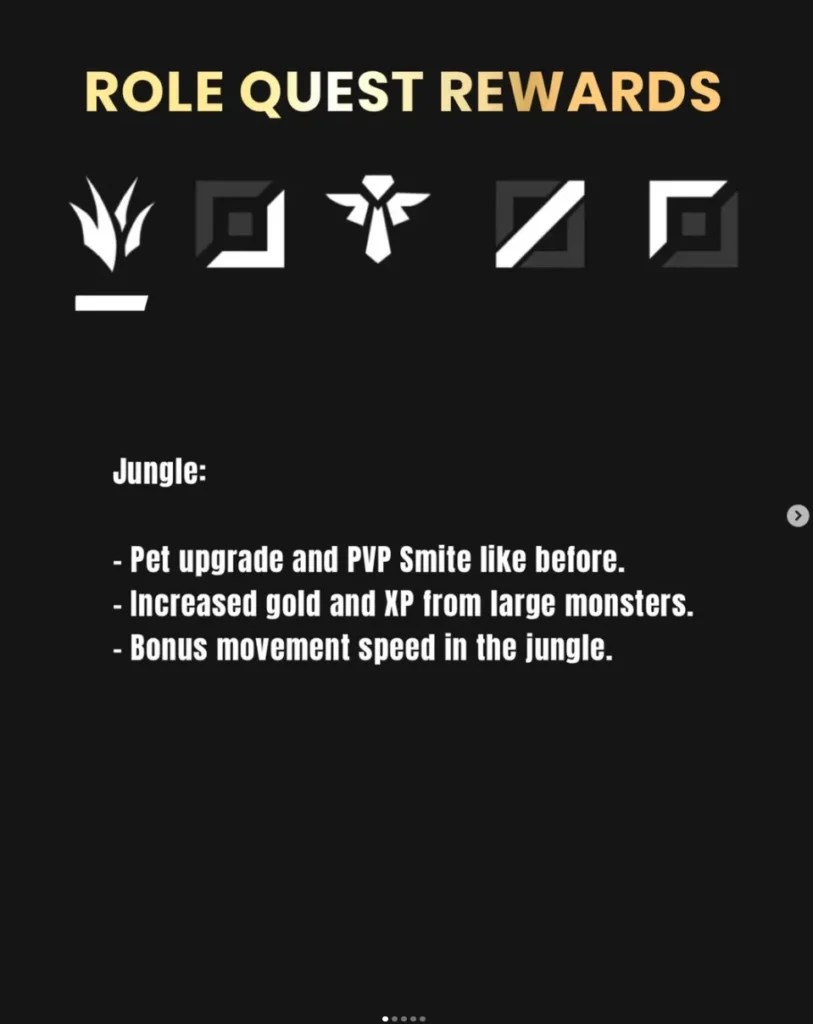
For junglers:
- Early clears are slightly slower to give lanes more breathing room
- Smite deals more damage and epic monsters are harder for non-junglers to steal
- Completing the jungle quest grants extra gold and experience from large monsters and bonus movement speed while in the jungle
For supports:
- Completing the support quest unlocks a dedicated control ward slot
- Control wards become cheaper to buy
- Passive gold income increases slightly so supports can afford more impactful items beyond pure vision tools
Because role quests reward you for interacting in your assigned lane, Riot can remove the lane swap detection system that previously punished early role swaps, especially in pro play. The new structure naturally encourages each role to perform its own job without hard bans on creative lane assignments. As these systems evolve on PBE and then on live, we will track follow-up tuning passes on the dedicated LoLNow updates page.
New and returning items for season 2026
Season 1 2026 also introduces a significant set of item changes: nine brand-new items and the return of both Hextech Gunblade and Stormrazor. At the same time, base crit damage returns to 200%, which on its own is a substantial buff to classic crit builds.
The new items aim to support sub-classes that previously felt underserved by the item system:
- AP fighters gain Scepter of Bonking, a Sheen-style item that doubles on-hit effects and interacts perfectly with kits that already have strong on-hits, like Diana’s passive or Gwen’s Q.
- Ult-focused ADCs get Emblem of All-Inning, a Zeal-like critical item that grants ultimate ability haste and guarantees critical strikes for a few autos after you cast your ultimate, or turns those hits into bonus true damage if they would have crit anyway.
- Light AD fighters get Blood Sphere, an omnivamp and tenacity option that scales its stats and healing as you pick up more bonus AD, with extra omnivamp after takedowns to help you survive extended fights.
- AD assassins get a new lethality item that lets them deal a large damage-over-time hit to towers or epic monsters after takedowns and adds periodic true damage onto one of their spells, giving them a real way to convert kills into objective pressure.
- Mana-scaling mages get Mananomicon, an active item that temporarily trades a big increase in mana consumption for lower cooldowns and stronger spells, with damage, healing and shielding scaling off your mana pool.
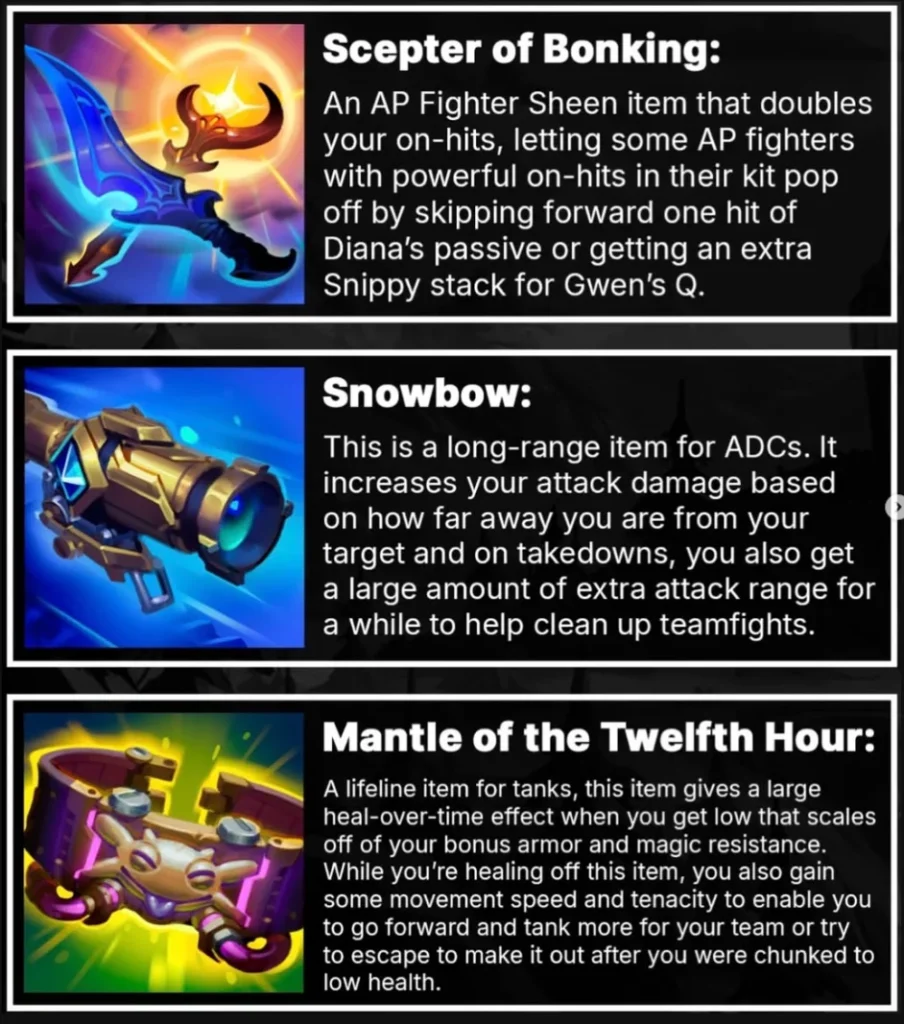
- Long-range ADCs get Snowbow, which increases your AD based on how far you are from your target and gives a significant attack range boost after takedowns for cleaning up fights.
- Tanky melee supports get Buff Engine, an aura item that grants team-wide attack speed after you slow or immobilize an enemy, with longer uptime for melee supports who stay in the thick of fights.
- Tanks get Mantle of the Twelfth Hour, a new lifeline item that heals you over time when you are low (scaling with armor and MR) and gives movement speed plus tenacity while the heal runs.
- Enchanters get the Savior’s Manabell → Superbell line, a Tear-based setup that converts mana into heal and shield power and later adds a periodic auto-heal on the lowest nearby ally during teamfights.
Hextech Gunblade returns as a hybrid AD/AP item with spell vamp, lifesteal and a targeted damage plus slow active, while Stormrazor comes back as an energized crit option with a damage and movement speed proc. If you enjoy following datamined builds and early balance experiments around these items, the LoLNow leaks page gathers early PBE discoveries in one place as they pop up.
For a visual walkthrough of these items, early stats and how they play in practice, SkinSpotlights has an in-depth preview that pairs perfectly with this section:
Watching that breakdown alongside the item list makes it much easier to picture which champions will spike hardest with the new options, and how late-game crit ADC builds will shift once the seventh slot for bot lane comes online. When the full patch drops, you will also find a clean text summary on the LoLNow patch notes hub so you do not have to dig through multiple sources.
Ranked changes in 2026: Aegis of Valor, autofill and duo queue
Season 1 2026 is also a big shake-up for ranked systems, aimed at making matches fairer and queue times shorter without turning every lobby into chaos.
The headline feature is Aegis of Valor:
- If you are autofilled and earn at least a C mastery grade in that game, Aegis can either double the LP you gain on a win or protect you from losing LP on a defeat.
- Players who almost never get autofilled because they main unpopular roles will still occasionally receive Aegis as a reward, so they are not permanently locked out of the system.
Autofill dodging is heavily discouraged in season 1 2026. Autofill status carries into your next game instead of disappearing, and at Master and above a dodge counts as a full loss.
Around that, Riot is making several smaller but meaningful changes:
- A new climb indicator appears on loading screens if a player’s MMR is significantly higher than their visible rank, so that late climbers do not look like random Bronze players in Gold games.
- Your flex MMR will be pulled closer to your solo/duo MMR if the two are far apart, so flex games no longer feel like stomps from off-role Diamonds.
- Autofilled players are matched more fairly: the system first tries to pit autofilled vs autofilled in the same role, and if it cannot do that, it at least balances the number of autofilled players on each team.
- Duo queue returns at Apex in most regions: Diamond I and above players can duo again into Grandmaster and Challenger, backed by stronger boosting detection.
- Champion select is shorter overall (fewer animations, tighter timers) and you can no longer ban a champion your ally is hovering.
For a compact video that focuses specifically on the systemic side of these changes, from ranked distribution to autofill, the “Season 2026 Changes – A Guide for League of Legends” video from 3 Minute League of Legends is a great companion to this part of the preview:
Together with the role quest changes and the new macro tools on the map, the ranked updates are designed to make League of Legends season 1 2026 feel less like a coinflip and more like a system where good play and flexibility are rewarded over the long run. If you want the studio’s wider vision, beyond just League, the Riot Games homepage is still the best jumping-off point.
Swiftplay and WASD: faster games and new ways to control your champion
Outside of core ranked, two big updates define what casual and experimental League looks like in 2026: Swiftplay changes and WASD movement.
Swiftplay is being leaned into as the mode where you can jump in, fight a lot and finish a game quickly, whether you are testing a new champion or warming up:
- You start at level 3 with extra gold, similar to ARAM.
- Death timers are shorter, so you get back to fights faster.
- Swiftplay inherits most of the Summoner’s Rift systemic changes (Faelights, Overgrowth, plates and so on) but does not use role quests.
- Grubs and Rift Herald are removed; Baron and Elder spawn earlier, and Elder arrives at a fixed time even if Soul has not been taken.
- Sudden Death kicks in earlier than before, and a new Minion Frenzy mechanic causes minions to go berserk after nearby takedowns, dramatically speeding up sieges.
On top of that, WASD movement finally leaves PBE and ships to live for all unranked queues except Normal Draft. The WASD team has:
- Squashed over 100 bugs based on PBE feedback
- Improved minion navigation, wall sliding and added a dynamic locked camera
- Given WASD its own auto-attack system so practiced players can still stutter-step and kite at a high level
- Added a “Scout Ahead” mode and extra camera tuning options, plus an accessibility option for 45-degree single-button lane movement
Ranked will not support WASD at launch. Riot wants to be sure performance is stable and competitive parity with point-and-click is good enough before they bring it into draft modes. In the meantime, you will almost certainly see creators testing WASD on the League of Legends category on Twitch and on the official League of Legends YouTube channel.
What League of Legends season 1 2026 means for your games
By now it should be clear why so many creators are calling League of Legends season 1 2026 a “change everything” patch. Almost every system that shapes how games feel – tempo, vision, pushing, objectives, items, role power curves and ranked flow – is getting adjusted at the same time.
For a more emotional, reaction-style take on just how different League will feel once all of this hits live, Vandiril’s preview is a great way to see the changes in motion:
The key takeaway for players is simple: you will need to adapt. A few practical ways to prepare:
- Play PBE if you can, and try at least one game in each role to feel how the role quests change your power curve and decision making.
- Experiment with side lane comps and split-pushers. Champions that can actually threaten towers on their own become much more valuable with permanent plates, Overgrowth and improved Homeguards.
- Review and update your builds. Crit ADCs, AP fighters, light fighters, tanky supports and enchanters all get new toys. Adjust your rune pages and item orders before you queue ranked in January.
- Mentally reset your expectations for early game. The first minute and your opening rotations matter more than ever now that minions and camps spawn so quickly.
Season 1 2026 is still in preview and PBE values can shift, but the direction is clear: more agency for every role, more viable macro strategies beyond “fight every neutral,” and a much more Demacian feel to the entire Rift. For official announcements and cinematics you can follow the League of Legends Instagram and the main League of Legends X account, while community reactions and theorycrafting will explode as always on r/leagueoflegends.
If you just want a clean, player-focused view of how League of Legends season 1 2026 actually feels once it hits live, keep an eye on LoLNow’s coverage and our rolling breakdowns on the news, patch notes and updates pages. Demacia’s golden age is coming either way – the real question is how quickly you adapt to it.



0 Comments